Risk Reduction / Safety Programs
North American Horsemen’s Association
Risk Reduction & Safety Programs by North American Horsemen’s Association
MEMBER ACCESS
The NAHA Risk Reduction Standards are available to members of the association as part of their membership kit.
Members may view the programs online under Section I of Applications & Forms located on this site. But first, you must call or e-mail us to ask for a password, as the forms are password protected.
Some of the standards are mandatory for NAHA Members who are insured under the NAHA Equine Liability and Property Insurance Programs. All Member Insureds are required to read and agree to compy with the mandatory standards for their insured activities. They will be required to sign the standards.
NON-MEMBER ACCESS
Non-Members may review the Standards by purchasing the book entitled Member’s Handbook of RISK REDUCTION PROGRAMS, LEGAL CONTRACT AND AGREEMENT MODELS [Price: $65.00]. (The book is included in membership kits.)
~~~~~~~~~~~~~~~~
The Standards development is based upon incidents that have been observed from records of some insurance companies; from expert advisers from the industry; and other statistics pertaining to accidents that occur in the horse industry with frequency or that have potential to cause severe bodily injury, property damage and even death to handlers, bystanders, or horses. While many more topics could be added, our concern is with common occurrences.
While fairly comprehensive, the standards are general in nature and may not apply to all horse operations. The practice of the standards may not function to mitigate or eliminate the potential for bodily injury or property damage in every situation. Emergency situations sometimes arise wherein it is difficult or impossible to follow a specific standard for a brief period of time.
Many NAHA standards appear to be higher than standards that are common to the horse industry. Operators are encouraged to develop additional risk reduction topics, guidelines, and practices for their operations in addition to those listed in the programs, though the programs can be a basis from which to develop the manual.
NAHA recommends that you seek legal counsel and the advice of other experts on questions of how to best apply these or any other standards to your situation and in your state or locale.
LIST OF NAHA RISK REDUCTION PROGRAMS
NAHA FORM 265: Risk Reduction Program for Equine Business Owners & Operators (32 Pages)
This program covers topics of concern for most horse business operators, including those who board, breed, train, and sell or lease horses. It also covers topics of concern for horse shows and events, instructors and coaches, disabled riding and driving programs, equine assisted therapy, camps, horse rental and novice trail rides, guides and outfitters, pony rides, and horse drawn vehicle rides. Included are sections on liability issues; use of contracts and release agreements; equine activities immunity laws; advertising and promotion; premises management and design; stable equipment; facility construction and fire hazards; horse care and protection; maintaining records; and patron management.
NAHA FORM 16: Risk Reduction Program for Benevolent Horsemen’s Associations or Clubs and Equine Events, Exhibitions and Competitions (13 Pages)
This program is for the benefit of benevolent clubs and associations and / or any entity who operates and manages equine related events, exhibitions and competitions. It contains topics on liability issues; use of contracts and release agreements; equine activity immunity laws; advertising and promotion; premises management and design; stable equipment; facility construction and fire hazards; horse care and protection; riding arenas; member, non-member participant, and spectator management; and event management.
NAHA FORM 26: Risk Reduction Program for Non-Commercial Personal and / or Pleasure Horse Owners, or Lessees (10 Pages)
This program is for the benefit of any horse owner or horse lessee who does not use their horses for business purposes.
It contains topics on liability insurance matters and issues; complying with your state laws; equine activity liability laws; inherent risks of horse activities and riding; protecting and caring for your horses; protecting yourself, your family members and others; property ownership; and the rightful occupancy of property owned by others.
~~~~~~~~~~~~~~~~~~~~~~~~~~
History of the Risk Reduction & Safety Standards
One key purpose of NAHA was to create and develop common sense, low cost risk reductions standards for most segments of the horse industry. The hope was that, when implemented on a broad scale, the industry would over time benefit from improved accident and liability experience and this would translate later into more availability of quality equine insurance products which were scantly available.
In the mid 1980’s something else was happening – civil law was changing, and this caused people to become very safety conscious as they became fearful of being sued. Lawsuit numbers ballooned, and higher risk recreation became difficult and sometimes impossible to insure. The frequency of horse-human injuries was quite high at a rate of 17 incidents reported for every 100 insurance policies placed. Severe accidents and death happened frequently enough. Frequency was a problem because servicing a high number of incident claims is expensive, while severe accidents were costly. We who loved horses began to wonder if horses might some day be considered too dangerous to exist for human use and enjoyment. Something had to be done, and in time several things were set in motion to improve the situation. Writing risk reduction standards was part of the remedy.
During the first eight years the standards were updated every two years because changes were so sweeping. 20+ years later the changes are fewer, but comprehensive review must be still be done. The task of updating is daunting, time consuming, and expensive.
Simple ideas can make a huge difference. NAHA statistics show that the most common occurrence of injury happens when a rider loses his or her balance and falls from a horse when it is moving according to its nature, which may not always be straight ahead. And for those who wonder, a percentage of riders just jump off. Riders and handlers often have some part in the errant behavior of a horse. For example, they may try to push the horse faster than at a speed the rider is ready for; or they may pull back on a horse’s mouth when it is already distressed and cause it to rear up or back up faster; or they may yell or scream and further scare the horse.
As with most accidents, things usually happen fast in a horse related accident. Many times people have little more than a second to consider what is happening and can do little or nothing to prevent an accident. For example, one moment a horse and rider are going placidly along a trail as a team, and the next moment a pheasant runs in the nearby grass. The horse hears it before the rider and in a split second he spins a half-turn or jumps sideways. The rider isn’t ready –doesn’t have the legs solidly enough against the horse’s barrel, and falls to the ground. Most riders will not be seriously injured from such a fall, but a percentage will. Because of the height of a horse and trajectory of a rider’s fall, the upper body takes the most impact. The most common serious injuries are broken arms, wrist or hand, injuries to shoulders, collarbone and back, and head trauma.
In 1987, a few critical safety ideas were obvious and remain valid today:
1. If people stopped falling off of horses so easily and so often, far fewer injuries would happen to them.
2. If children were supervised by knowledgeable adults while working with horses on the ground, kicking and dragging injuries could be avoided.
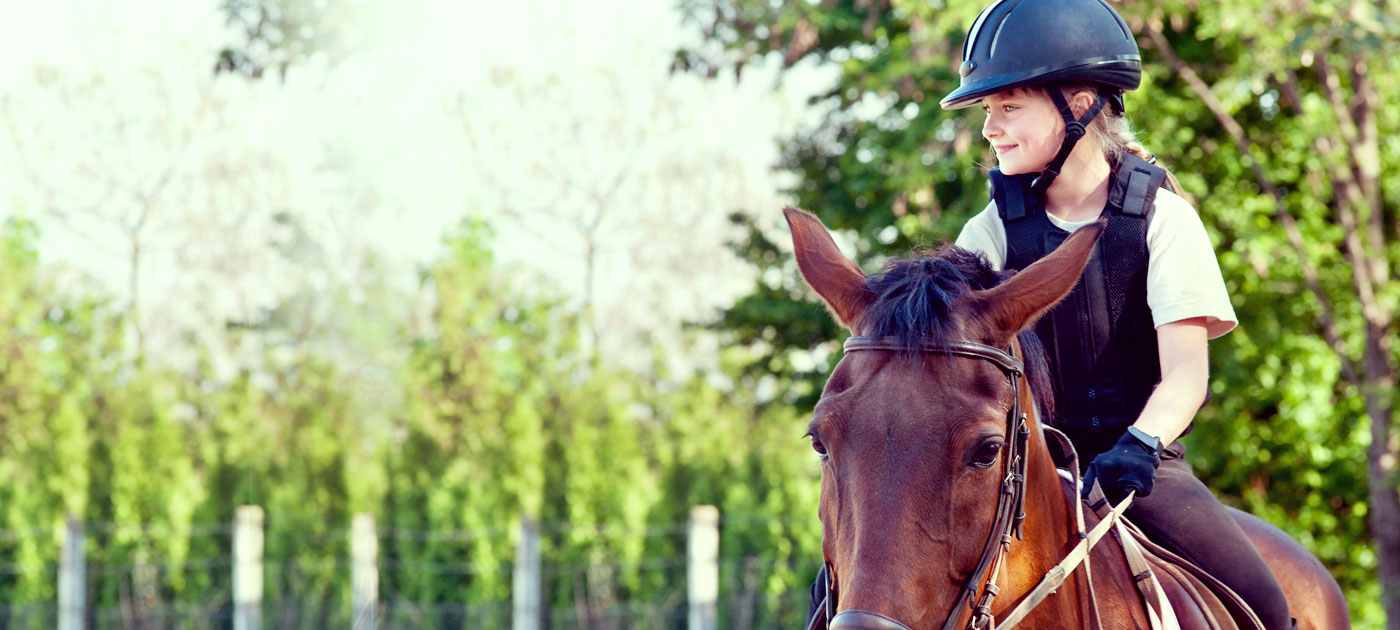
3. If people fall off anyway, as eventually they will do, and they would wear viable head protection, head injuries would be fewer and less severe.
4. If people avoided alcohol use when around and handling horses, or while being a passenger on a horse or horse drawn vehicle, an impressive percentage of injuries would never happen.
5. If people stopped riding double, particularly with small children and novice riders, serious injuries and some fatalities could be avoided.
6. Using properly fitted tack and equipment in good condition would cut down on equipment failure incidents; primarily breaking of bridles, stirrups and cinches. Also, checking and re-tightening the cinch about five minutes into a ride, and every hour or so on a long ride, could often stop saddle slippage.
7. Using horses that are well trained, suitable, tested, and seasoned for a particular use will keep novices safer. Monitoring school, rental, and carriage horses for changes toward high risk behavior and removing them from service will help as well.
8. Maintaining strong and appropriate farm perimeter fencing will keep horses out of roadways and stop most auto-horse collisions. Second level interior barrier cross-fencing and gating will go further toward keeping horses in and away from places and people they should not get near.
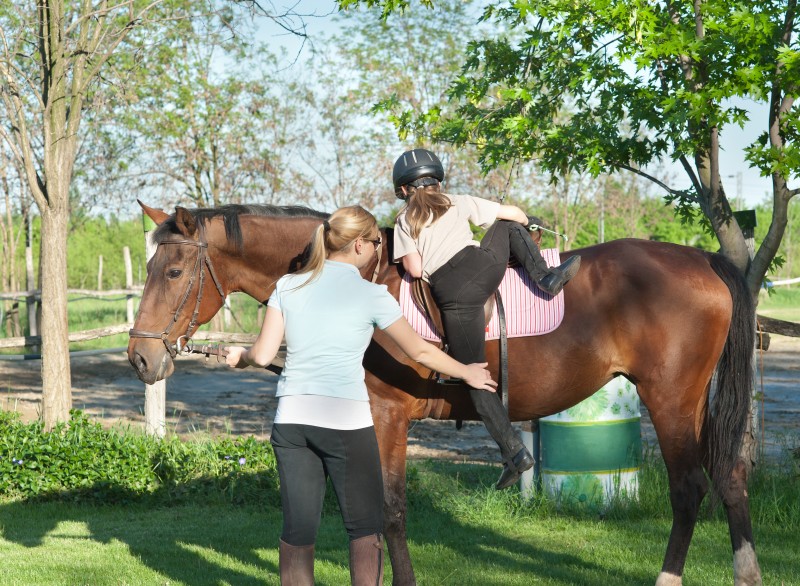
9. Providing very controlled rides for children under age 8 on ponies controlled by an adult and with a spotter present, and only when performed inside of a small fenced enclosure, will keep the little ones safer than any alternative. It was proven too risky for a horse or pony with a child on its back to be led on a trail ride by a rider on another horse. It was also too risky for most children under age 8 to ride by themselves in the wide open spaces.
10. Just warning and reminding people about the nature of a horse and the key things they can do to avoid an accident will make many think twice about doing something with a horse that is too risky.
11. Unguided, unsupervised commercial novice trail riding is a high risk activity.
These were all simple, powerful ideas that have since gone a long way to reducing accident frequency and severity of injuries to people and horses – particularly with business operations.
Have the programs been successful? The short answer is resounding “YES.” Statistics and accident studies show they have been very effective. The standards are respected and used to some considerable degree throughout the industry, even though many of the standards are higher than those common to the industry. Because of improved risk of horse activities, more numerous and better insurance options are available for the horse industry today.
Will any safety standard keep people totally safe while around or on horse? No – they will not. The nature, size and usage of horses by imperfect humans in an imperfect world make this impossible. Even the best trained horse is perhaps only 80% predictable, and that depends upon who is handling them. As with the use of safety belts in autos, in most accident situations they will protect a person, but sometimes they will not. The same goes for practicing the best of management standards by people with horses.
While we who love a little adventure can’t create a perfect world, we can be mindful of, practice, and teach best management practices so that horse – human incidents rates continue to improve. And this will help to ensure that the horse will always grace the landscape and remain a fulfilling recreational option for man.
WHERE TO BEGIN
Your insurance needs are unique, therefore we believe in person to person service. You may complete a short inquiry application by clicking Get an Insurance Quote. Call or e-mail an Ark Agency Representative for an estimated premium, policy and company details, and qualification requirements. We work with several insurance companies and rates and coverage conditions vary. We will help you determine which application to use and advise on how to put insurance in force. To learn more and to review the most frequently asked questions about liability insurance, read our brochure by clicking below.
»Read / Print Brochures
»Get an Insurance Quote
»Home Page »Contact Us
*General information is provided on this insurance topic. Acting on our coverage recommendations does not guarantee coverage if you have a loss or claim.