Horse Trainer
Insure Your Horse Training Services for Liability
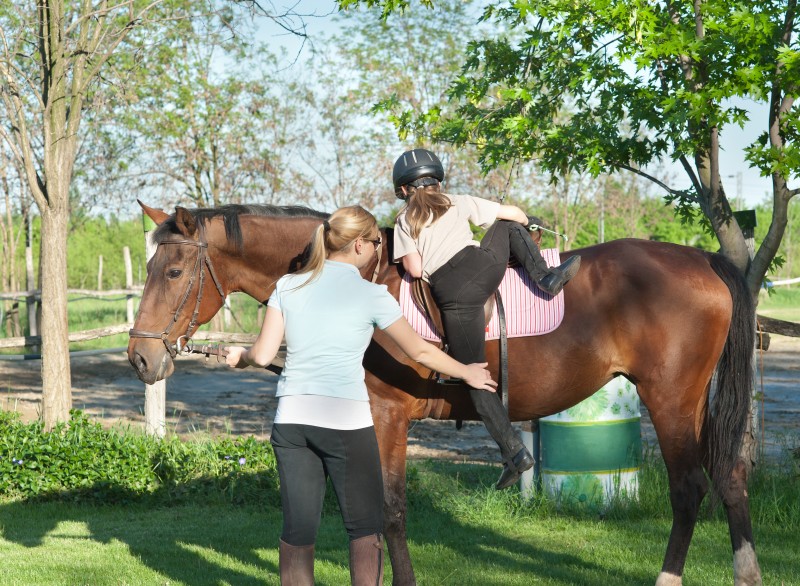
There are many levels to training horses. You may specialize in starting young horses in basic training and preparing them for use by novices. You may train horses for advanced horse owners who compete and show the horses. You may train and exclusively show horses for the owners. Training horses usually has an instruction crossover. Most trainers will instruct the owner how to ride the horse at some point; or to coach riders and handlers at shows. Some trainers teach others how to train horses either for certification or in seminars and clinics.
Perhaps the greatest concern for trainers is the potential for an accident to happen with a horse that causes injury to a bystander or observer or property damage. The second concern is that a non-owned horse could become sick, injured or die while in the trainer’s care. You worry that you may be sued or otherwise have a claim made against you for bodily injury or property damage. If sued, you may need to hire a lawyer to defend you. If found negligent, you could be responsible for the cost of the claim. Trainers usually have moderate liability exposure, but a strong need to be insured for their activities and exposures to liability. This is mostly because of the strength and unpredictability of horses when being pushed to improve and learn new skills, and the exposure to the public at events. You should be concerned for your financial protection and responsibilities toward those you serve. Fortunately much concern can be relieved when you buy a COMMERCIAL GENERAL LIABILITY POLICY [GL] to insure your training activities and the horses you train.
If you are an Independent Trainer who operates at various stables you do not own, go to Independent Contractor Horse Riding Instructor – Trainer Liability Insurance on this web site.
Related Liability Exposures to Consider:
Qualified Trainers have a Professional Liability exposure. The more you know and the more you present yourself to the public as an expert, the higher your Professional Liability Exposure will be. Most insurers do not provide this important coverage, but we are able to provide Professional Liability Insurance on your general liability policy by endorsement and there is a separate nominal premium charge for it. Even if you have a secondary, minor Instruction, Coaching or Clinician exposure, it should be insured under your liability policy and not ignored as a potential liability exposure. Advertising and Promotion at trade shows, in magazines, on flyers and posters, and on the internet is an exposure of moderate concern that is usually insured under a GL Policy. Having employees requires Worker Compensation Insurance under a separate policy of that type, as Work Comp is not part of a liability policy.
Horse trainers also have a Care, Custody & Control Liability exposure. This is because a non-owned horse in training may become injured or sick and even die while in the trainer’s care. The trainer could be held liable for related expenses, and be required to pay for the horse if it dies. We are able to offer this coverage on your GL policy as well, and will quote it to you if you complete the Care, Custody & Control section of the policy. This coverage is optional and there is a separate nominal premium charge for it. Note that non-owned horses cannot be covered this way if they are leased by you. When you lease a horse you become its temporary owner and this situation requires the horse to be insured for loss and injury by a Horse Mortality and Major Medical Insurance Policy. As a trainer of non-owned horses, it is always wise to recommend the owner insures their horse for Full Mortality and Major Medical or Surgical Insurance. It may help to financially protect both of you. When taking in a horse, you should ask about its value and if it is insured for life and health. Get the name of the Insurer, policy number and emergency contact number to call should the horse develop a physical problem. You could be held accountable for not following the requirements of the Insurer.
How Risky is Horse Training Services? MODERATE to MODERATELY HIGH
It is the teaching component, and the fact that many trainers are working with untrained or partially trained horses, and have off premises activities, that add risk to being a trainer. If you work with animals of a high value, this also adds risk.
Horse activities are reasonably safe compared to many other activities people participate in. Yet, horse-human activities do carry inherent risks. Accidents do happen when people at different stages of capability attempt to touch, handle, train, ride, drive and control large animals that are unpredictable even when well trained. And some horse-human accidents are serious. Even with the best of intentions and management practices anyone can have a claim made against them and be sued.
You Must Plan Ahead – A FIVE PRONGED STRATEGY
No one wants someone to be injured on or in relation to their property or business operations. No one plans to have an accident that results in a liability claim they are responsible for. Yet, you still must plan against and for an accident, and there is a five-pronged strategy you should follow:
1. Accident Avoidance is the first strategy. This is best accomplished by implementing a thoughtful operational risk reduction plan that provides a reasonably safe physical environment and procedures for horses and people. All staff members should be trained in those practices. [NAHA Risk Reduction Programs can assist you.] 2. Emergency Procedure Planning is the second strategy, and it can be important to minimize the severity of an accident and provide proper care at the time. 3. The third strategy is to use well-worded Warning and Release of Liability Agreements. [NAHA can provide contract models for your use.] Have them completed and signed completely and correctly by all participants. Keep the signed forms on file and safely stored for several years as suggested by an attorney in your state. 4. The fourth strategy is to carefully review and comply with your state’s Equine Activities Immunities Law, if your state has one. All states have some form of the law except California, New York, Maryland, and Nevada. Some require special wording in warning and release agreements, and some require posting of specific warning signs on your property. 5. Purchase an Equine Liability Insurance Policy that adequately covers and lists your specific activities in the policy. The policy should be placed with an A rated domestic insurance company having a good reputation for service, knowledge of equine risk, and for handling equine liability claims. Be wary of low pricing, as generally a low price means something important is missing in the policy or the Insurer may not understand how to price equine exposure. This important fifth strategy can protect you and your business from financial loss should an accident happen. It helps fulfill the sense of responsibility you have about serving the public, but it provides more than peace of mind. In event of a covered claim, the Insurer provides legal defense and pays for defense costs. It pays for claims costs and settlements made against you up to the limits of your policy. Just as important is the fact that knowledgeable professionals will handle and manage the details of your claim in a way that looks after your claim and litigation interests, so that you can continue functioning with the least amount of “hassle.”
Equine Activities Immunities Laws have been passed in 46 states. While these laws may help you avoid liability, they will not usually thwart a determined injured party from pursuing a claim or law suit. This is because to receive immunity under the law, the activity sponsor must have performed in a specific way according to what the law requires. And often immunity is determined through some type of expensive legal proceeding that can result in a large, often uncontrolled expense to an uninsured stable owner. You still need to be properly insured for liability.
If You Rent the Property Your Business Occupies, We Can Also Insure Your Tack, Equipment, and Machinery for Loss or Damage
As a stable property renter, you may not have access to property insurance for tack, equipment and machinery you use in your business. Ark Agency can insure these items by adding a Property Coverage Endorsement to the General Liability Policy. Additional premium is charged for this endorsement and the items and values must be declared in the application process.
The General Liability Policy includes specified maximum limits or amounts of liability insurance for:
- Medical Expense: Pays for low cost medical expense with no questions asked about your liability or responsibility in the matter.
- Legal Defense Costs: Today court costs and hiring of a lawyer can quickly mount to $50,000 or more, an expense you do not want to come out of your pocket if you are sued and have to hire a lawyer. If sued in relation to this activity, the policy provides legal defense whether the case has merit or not.
- Settlement or Claim Costs: For bodily injury and property damages for which you are responsible and held negligent and liable.
The three most common claim incidents for Horse Instruction, Coaching and Training:
- Horses in training become injured or may even die while in the trainer’s care, custody or control. Horses can become injured during the training process when challenged to learn something new or are handled or integrated into a strange environment.
- A horse gets away from the trainer at a show, runs into the road and is hit by a car. The horse must usually be destroyed, while property damage to the car and bodily injuries to passengers can result in a sizeable claim.
- A horse “acts up” in an unsafe way while in the trainer’s care, causing injuries to bystanders, other horses, or the property of others.
People who read this page may also be interested in: Independent Contractor Horse Riding Instructor – Trainer Liability Insurance Horse Instruction, Coaching and Training Services Liability Insurance Horse & Equine Professional Liability Insurance
WHERE TO BEGIN
Your insurance needs are unique, therefore we believe in person to person service. You may complete a short inquiry application by clicking Get an Insurance Quote. Call or e-mail an Ark Agency Representative for an estimated premium, policy and company details, and qualification requirements. We work with several insurance companies and rates and coverage conditions vary. We will help you determine which application to use and advise on how to put insurance in force. To learn more and to review the most frequently asked questions about liability insurance, read our brochure by clicking below.
»Read / Print Brochures
»Get an Insurance Quote
»Home Page »Contact Us
*General information is provided on this insurance topic. Acting on our coverage recommendations does not guarantee coverage if you have a loss or claim.